Love From The Start
Receiving a Down syndrome diagnosis for your child can be a moment of profound loneliness and emotional uncertainty. That first step on the parenthood and advocacy journey can be filled with fear and misconceptions, begging the question, “What will my child’s future look like?”
Hundreds of Down syndrome community members have come #TogetherAgainstLoneliness this World Down Syndrome Day to deliver an important message of inclusion and connection to new and expecting parents:
you are not alone.
Thank you to all of the families who submitted home videos, Hytt Films, One For The Wall Photography, and Allgera, Connor & baby Solstice for helping to create this message from the community.
AS FEATURED IN


Help us share this honest depiction of life with Down syndrome with new parents to provide comfort, support, and to remind them of the most important thing: whatever may come for your child’s future, there will be love from the start.
How Can You Help Welcome and Support New Parents?
Making a gift to CDSS ensures that we can continue to provide important resources, share lived experiences, and shift the public perception of life with Down syndrome to create opportunities for the future.
Congratulations On Your New Baby!
And welcome to the Down syndrome community! Our CDSS Awareness Leader Paul Sawka would like to share some words of encouragement with you during this emotional time.
Paul shares his experiences about growing up with Down syndrome, aging, advocacy, friendships, and his passions on our self-advocate blog. Follow along for new posts every month and learn more about life with Down syndrome!
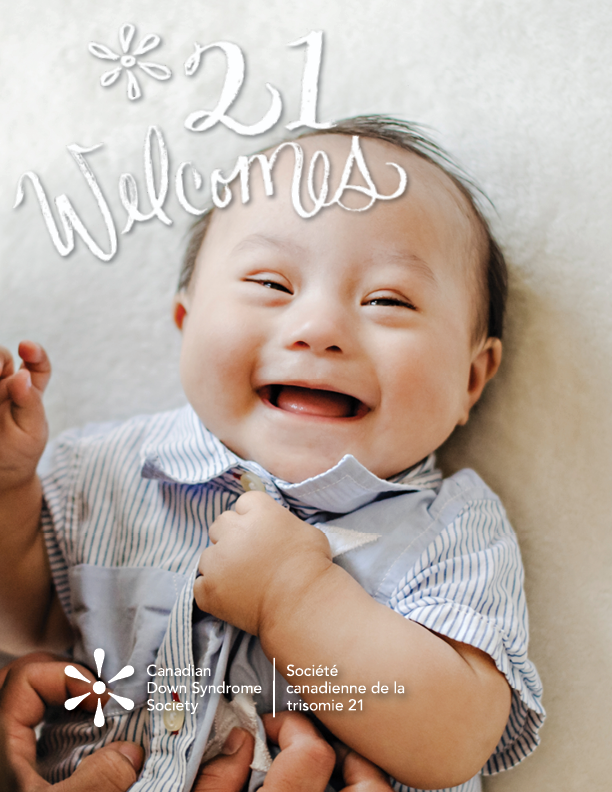
21 Welcomes: Your Trusted Guide
21 Welcomes is Canada’s guide for new parents who are expecting or just had a baby with Down syndrome.
This booklet will support you through the beginning of your journey into the Down syndrome community with stories from other parents, messages about what it’s like to live with Down syndrome in Canada, advice on how to share the news with friends and family, and essential information about feeding, early interventions, and more.
Take All The Time You Need
All parents have different feelings when they find out they have a child with Down syndrome. Some parents feel happy and excited about the birth of their baby, while some experience feelings of shock, sadness, guilt, or disappointment.You should know that there is absolutely nothing that you did to cause your child to have Down syndrome.
No matter how you feel, remember that you are not alone in this journey. Right now, you probably have a lot of questions and concerns. Try to surround yourself with friends and family who will support you through this time.

“Congratulations and welcome to the best, most inclusive club around! If you’re reading this, it is because you have just welcomed a child with Down syndrome into your life. You might have a mix of feelings in your heart and mind right now. Take your time to sort through them. Be gentle with yourself. And get to know the new person in your life, with all of the qualities they possess.
Our family officially received Everett’s diagnosis when he was 9 days old, but our pediatrician took about five minutes after his birth to broach the subject. Her first sentence was – ‘I see some signs that suggest he has Down syndrome’ – it felt like someone had pulled the rug out from under me.
I was in a freefall away from the life I had imagined with our family of 5. Her next sentence caught me mid-fall and gently set me back down – ‘so we have some things to figure out about him, but the most important thing is that you will take him home and love him and spend time getting to know him.’ That would set the tone for how we would embark on this journey as a family.”
– Sarah Kocher
Adjusting takes time. The adjustment process is different for every person. You should take as much time as you need in your journey. If you feel like you are not able to cope, seeking help from a professional may be beneficial.

“My husband Henry and I processed the information we were given a bit differently. I received the possibility of Down syndrome calmly and matter of factly, knowing that Henry and I are incredibly capable people of caring for this child and giving her exactly what she needs. What scared me was the unknown of what that meant, not knowing what the future would look like.
When Henry received the information, at first he was quiet, taking it all in, but then he proceeded to panic. Looking back now, he says that the panic that came upon him in those early moments were directly related to the unknowns. All of the unknowns made him feel completely out of control and ultimately his fear made him feel that he didn’t know what to do to help Winn.
In my husband’s panic, he called my mom (Karen) who was anxiously awaiting our update. He explained to her what was going on and quickly followed it up with “What do we do Karen, how do we help her?” In my mom’s natural and beautiful way that she approaches almost all situations in her life, she took a moment to absorb what Henry told her, took a deep breath, and said “Henry, you have to remember that Winn is your baby first. She needs you to love her and care for her exactly the same way Rosie (our first daughter) needed you and still needs you. She is your baby first. And everything she needs in her future will fall into place because I know you and Megan are more than capable of raising this beautiful child.”
The words “she is your baby first” put everything into perspective for us in those very early and fragile moments of receiving the possible diagnosis.”
– Megan Croteau

What is Down Syndrome?
Down syndrome is a naturally occurring chromosomal arrangement that has always existed and is universal across racial, gender, and socio-economic lines. There are about 430 live births with Down syndrome in Canada every year, adding to our slowly growing community of over 23,000 individuals.
What Will My Child’s Future Look Like?
Over 50 families from across Canada have shared some of their favourite memories with you to give you an honest look at what life with Down syndrome can be – a lot of love, laughter, kindness, and compassion.
Join the CDSS Down Syndrome Community
Stay connected to the issues that matter most. We provide parents, caregivers, and self-advocates with updates about important advocacy initiatives in Canada, community news and events, and new program and resource launches. As part of the CDSS community, you will also receive a free quarterly issue of 3.21 Canada’s Down Syndrome Magazine.
Welcome New Parents
Connecting with The Community
When you are ready, we suggest that you contact a Down syndrome parent networking group in your area where you will meet other parents and families who have a child with Down syndrome. You will also learn about useful local resources. Many parents find connecting with other parents of children with Down syndrome an excellent way to gain confidence by sharing their feelings and concerns.

“I quietly walked to my doctor’s office feeling worried and uneasy, but I could feel my baby move so it must be okay. I tried to convince myself everything was fine, but the sense of something being wrong that I’d felt from the technician’s reaction was strong. When the doctor came in, she sat down and without hesitation calmly said, “Your baby is showing some soft markers for Down syndrome.” Despite my sense she was going to say something was going on, this hit me like an unexpected punch. After much debate and discussions with her and my family, I did have an amniocentesis which confirmed our baby was a boy who had Down syndrome.
I was stunned, sad, confused, and scared. I did not really know or understand what all this meant – for me or for this baby growing inside of me. As a parent, you want your children to grow up, be healthy, and live strong, happy, and independent lives. The little knowledge I had of Down syndrome suggested this was not going to be the reality for my son. But I also knew that I needed to find a way to have those same hopes and dreams for my unborn son that I had for his
older brothers.
The hospital put me in touch with another parent who was happy to speak with parents who also had a child with Down syndrome. I felt raw and vulnerable, but knew I would find it helpful so I made the call. She was immediately warm and friendly and invited me to her home to meet her son. When I walked in her front door, I was greeted by her generous smile and one of the most beautiful little boys I have ever seen. She beamed with pride over his many accomplishments in his first two years but was honest with me about the emotional roller coaster she and her partner had been on and the challenges they had faced. It was an emotional visit, but I left her home feeling uplifted and inspired.
Our son, Owen, is now a teenager, and I wouldn’t change a thing about him. When I am asked what he is like – I am always quick to say he is everything I was told he would not be. He is active, he is chatty, he is bright, he is kind, he gets sad, and mad, and giggles with great joy. He loves to learn, he loves to read, he loves to swim, and ride horses, and he loves to play with his friends and brothers. He loves his family and our love and respect for him, and his life, is immeasurable.”
– Jennifer Crowson, CDSS Board of Directors Chair
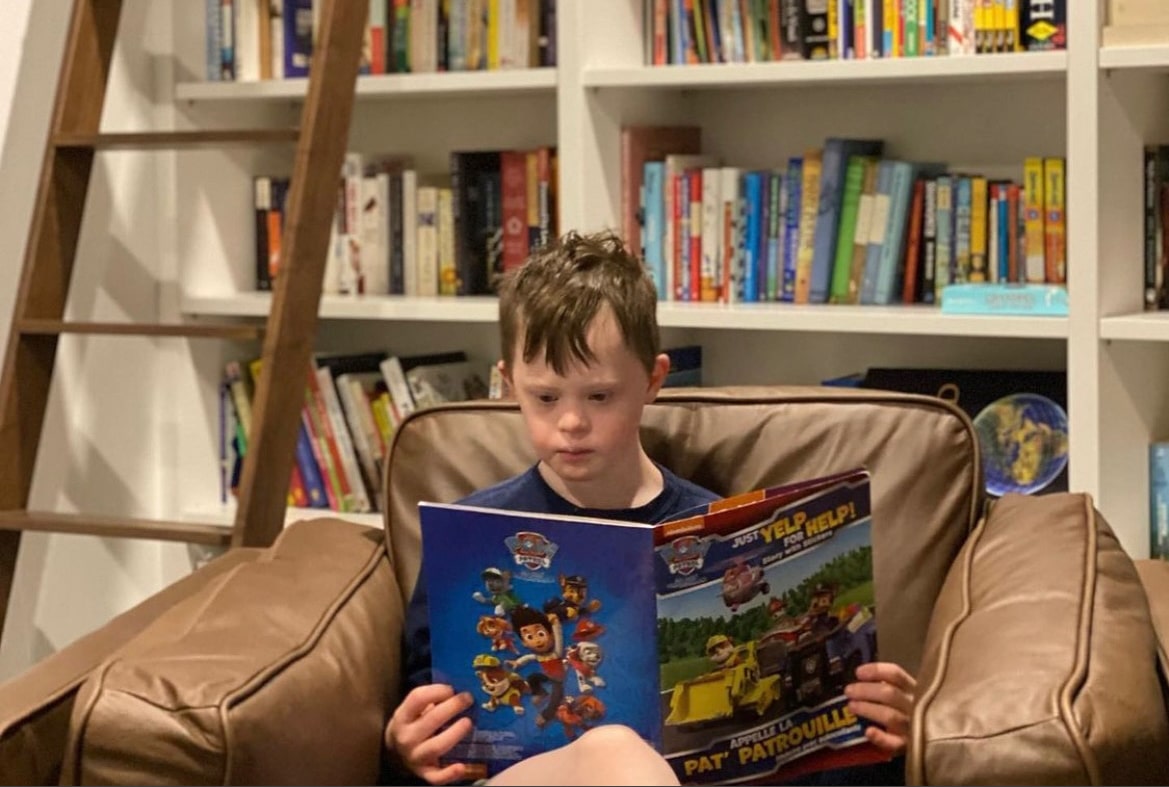
Talking to other people who have gone through similar experiences might help you feel less alone and give you hope for the future. If you are not ready to connect with other parents, that is okay too. Feel at peace with your adjustment process.
If you would rather read about others’ experiences, a blog or social media account might be a good place to start. There is a large Down syndrome community online, we suggest researching the hashtag #TheLuckyFew to get started. You can also find more stories like those shared on this page in 21 Welcomes.

The Multilingual Caregiver Network
The Multilingual Caregiver Network creates opportunities for caregivers who are new to the community to engage via phone or video chat with someone who speaks their first language. There are currently over 14 languages represented in our network and we are always looking to grow!
How Will My Other Children React?
After giving birth to a baby with Down syndrome, it is common to worry about how it will affect your other children. This is understandable.
The good news is that a study done by Dr. Brian Skotko, a world leader in Down syndrome research, found that an overwhelming majority of parents feel that their children with Down syndrome have a good relationship with their siblings. They also found that 94% of older siblings to a child with Down syndrome are proud of their brother or sister.

“When we found out I was having a sister, my parents sat me down at the table and told me she would have Down syndrome. They said she would be different. I said ¨So what? We are all different!” I didn’t fully know what that meant, my mom would read me books and explain what it would be like. The doctor told my parents she would learn slower, not be able to dress herself, feed herself, and not even be able to talk. We went to meet my mom’s friends and their kid had Down syndrome. When we were walking out to the car, I told my parents I wanted a sibling just like her.
Once she was born, I found out she had to have heart surgery. I was so worried. I couldn’t believe my little sister had to have surgery. I was so scared. Once she was able to come back home, it felt so good to have her safe and healthy with us.
We worked hard and taught her so much. She can do everything the doctor said she couldn’t do and more.
She skis with me, she bakes with me, she sings, and dances with me. She loves school, we read together, and she always makes me laugh. She is unstoppable. I want others to see that she may look different, but we are all different and beautiful in our own way and there is nothing ¨down¨ about Down syndrome.”
– Ana Maria MacKeigan
The vast majority of people describe their relationship with their sibling with Down syndrome as positive and enriching; some even say their sibling is the best thing that ever happened to them. It is important to keep in mind that your children will have their own unique journey, full of the typical friction, learning, and love that embodies sibling relationships.
Some siblings will take on the role of caregiver, but others may find it difficult to understand why their sibling with Down syndrome seems to get extra attention. This may make the sibling feel resentment or embarrassment toward their brother or sister. Some will also have questions and concerns for their sibling, making it important to communicate openly and often.

“Growing up in Winnipeg with my sister, Natalie, we’ve always been friends. I’d protect her in our snow fort castles during snowball fights, with “Queen Natie” sitting on her throne. Looking back, I felt an instinctive need to shield her from the judgment of strangers, the cruelty of bullies, and trying to soften a world that often felt harsh and unaccommodating.
After my dad died from a long battle with esophageal cancer in 2019 and my mom from stage 4 lung cancer the following year, I had to transition from brother to caregiver. My sister and I bonded closer through that loss. It wasn’t easy, but my mom, Cindy, laid the foundation and was the one who fought for my sister from day one.
She made Natalie into the strong, independent, confident woman she is today. She took her to speech therapy, fought for her to be in fully inclusive classrooms alongside her peers and insisted she be treated as an equal. My mother eventually became a teacher’s assistant for children with special needs. She taught Natalie how to respect others, how to be independent and kind, and how to problem-solve on her own. For thirty years, she was Natalie’s caregiver and best friend.
As I’ve grown older, becoming her caregiver and her big brother has completely shifted my perspective on the purpose of life. Natalie finds pure joy in the little things we often forget to appreciate as adults. She truly makes my life better every single day.”
– Drew Hyttenrauch, Director of Love From The Start

More Stories and Perspectives
You can read more stories from parents, siblings, grandparents, and adults with Down syndrome in our guide for new parents, 21 Welcomes.
Taking The First Steps
After learning your baby has Down syndrome, one of the hardest things can be telling your friends and family. You may still be adjusting. You may be worried about how others are going to react to the news.
It is normal to feel nervous about telling your friends and family that your baby has Down syndrome. You might get mixed responses from them. Many will be in shock and will grieve the same way you did. Tell them that this new baby is something to be excited about and to celebrate. It is important to remind your friends and family about the joy of having a new child.

“Our son, Archie, was born earlier than expected and we spent ten days in the NICU before we learned he had Down syndrome. I remember trying to decide how to tell our people about his diagnosis. We wanted to be sure they knew we weren’t ashamed of him and were open to talking about it, so waiting wasn’t an option. We told our whole world right away. It was healing to talk and be open about his diagnosis.
We were feeling all of the things; sadness, fear, uncertainty, excitement, joy, acceptance, and disbelief. There were moments we grieved the son and the life we had imagined for our family; wondering what he would and would never do. Not wanting a child with a disability but a “normal” child. In hindsight, it’s hard not to be critical of ourselves for those thoughts but it’s important to forgive yourself and have grace.
I spent some time on Instagram watching other families with a child with an extra chromosome doing life, and it was very therapeutic. We felt supported by our family and friends who didn’t hesitate to accept Archie.
We were thinking about therapy and all the things we could and would need to do to support Archie when the geneticist told us, “don’t worry about therapies and all the things for now, just love your baby. He will do all the things, hit the milestones, it will just be on his own timeline.” He was right.
Having a child with Down syndrome will be hard work at times, but your child is absolutely worth it. You will feel immense pride because you will know how hard they work in everything they do. Congrats, I’m excited for you! Take a deep breath. Your little one will show you the way, just love them and let them.”
– Laura Anderson
Raising a child with Down syndrome will be much like raising any child. There will be ups and downs, challenges, successes, smiles, laughter, and tears.
Although you may be overwhelmed right now, the future is very bright for people with Down syndrome. Now more than ever, there are supports and programs that allow people with Down syndrome to flourish. Canadians with Down syndrome are living longer, happier, more fulfilled lives, and that is in part thanks to loving caregivers and parents like yourself.

“If you ask either Max or his sister Libby what it means to be an Anderson, they’ll likely respond with something to the effect of, “We are kind, encouraging, and we look for lonely people.” These are some of the qualities we are hoping to ingrain into our young children’s hearts. Yet without intending to, Max is teaching me so much more:
How to not always be in such a big hurry.
How to be more patient, forgiving, and understanding.
How to love unconditionally.
How important it is to hug.
How to appreciate the awe in the everyday ordinary little things.
Case in point: When Max tested positive for Covid and we were a little concerned how it might affect him. Later that same day we cooked and ate outside on our back deck, and as Max dove into his grilled cheese sandwich he exclaimed, “this is the best day of my life!”
It’s a statement you’ll frequently hear from Max and he means it every single time. And there are so many days where I’m left wondering… who’s teaching who?
– Scott Anderson
Support at Every Stage of Life
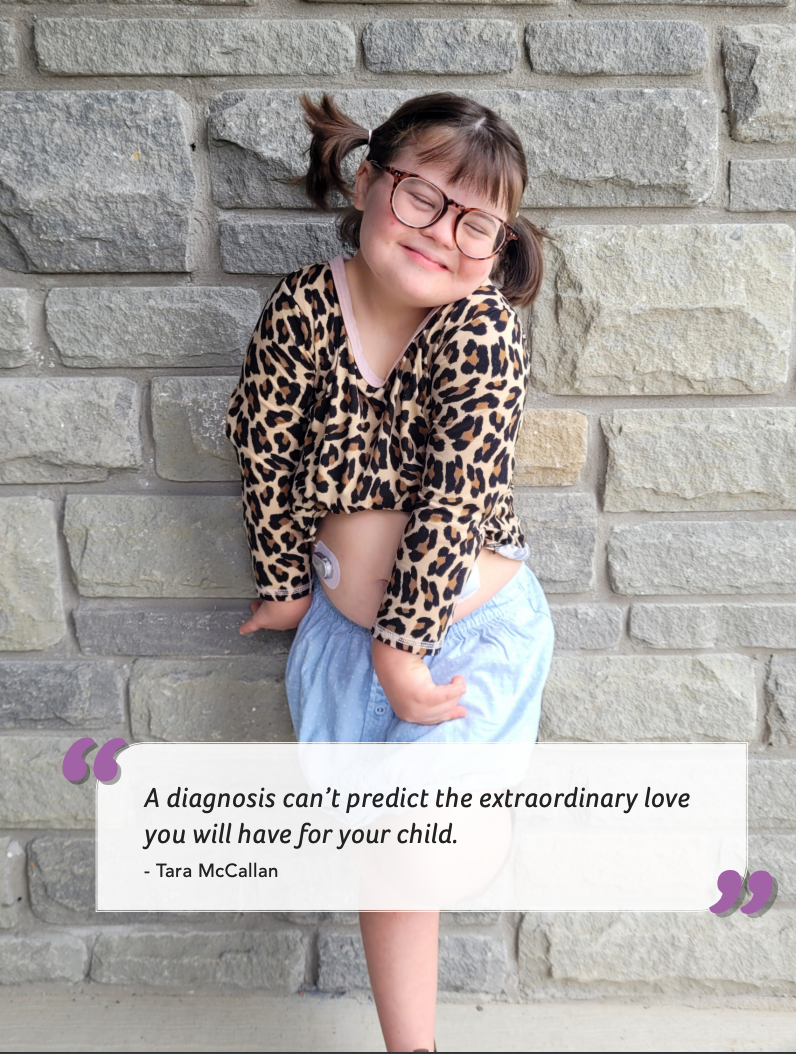
As you take these first steps on your journey, don’t forget that there is a devoted community ready and waiting to help you. That begins with resources and programs to support your child at every stage of life, from early childhood and education to employment and aging. When you’re ready (and when you need them) there is a library of resources available at CDSS.ca/Resources.
You can also reach out to your local Down syndrome organizations and groups to connect about programming and events.
Congratulations On Your New Baby!