Down Syndrome Research
Contribute to Advancing Down Syndrome Research in Canada
There are relatively few research studies dedicated to the Down syndrome community. This leaves a large information gap, which if filled, could mean improved care and support for Canadians with Down syndrome and their families. By participating in research today, you are providing critical information that will inform and guide future programs and advocacy work. Please browse the active studies below and thank you for helping to shape the future of our community.
Active Down Syndrome Research Studies
DOWN SYNDROME REGRESSION DISORDER CAREGIVER DISTRESS SURVEY (University OF SOUTHERN CALIFORNIA, Remote)
With help from a medical student at USC, researchers including Dr. Jon Santoro are seeking to better understand the multifaceted impacts of DSRD on caregivers and families. Understanding the extent and nature of caregiver distress in this context is helpful in developing support systems that alleviate caregiver burden and enhance family resilience. In addition, this information will be critical in communicating the need for research on DSRD to organizations like the NIH.
- Participants must be over the age of 18.
- Participants must have a child or a close family member with a possible or probable diagnosis of DSRD.
- Participants should be knowledgeable about the family member’s diagnosis, symptoms, and treatment plan.
- Participants will complete a short online survey that takes approximately 10 minutes.
Follow the link below to participate in the study.
For any questions, please email knchow@usc.edu or dsresearch@chla.usc.edu
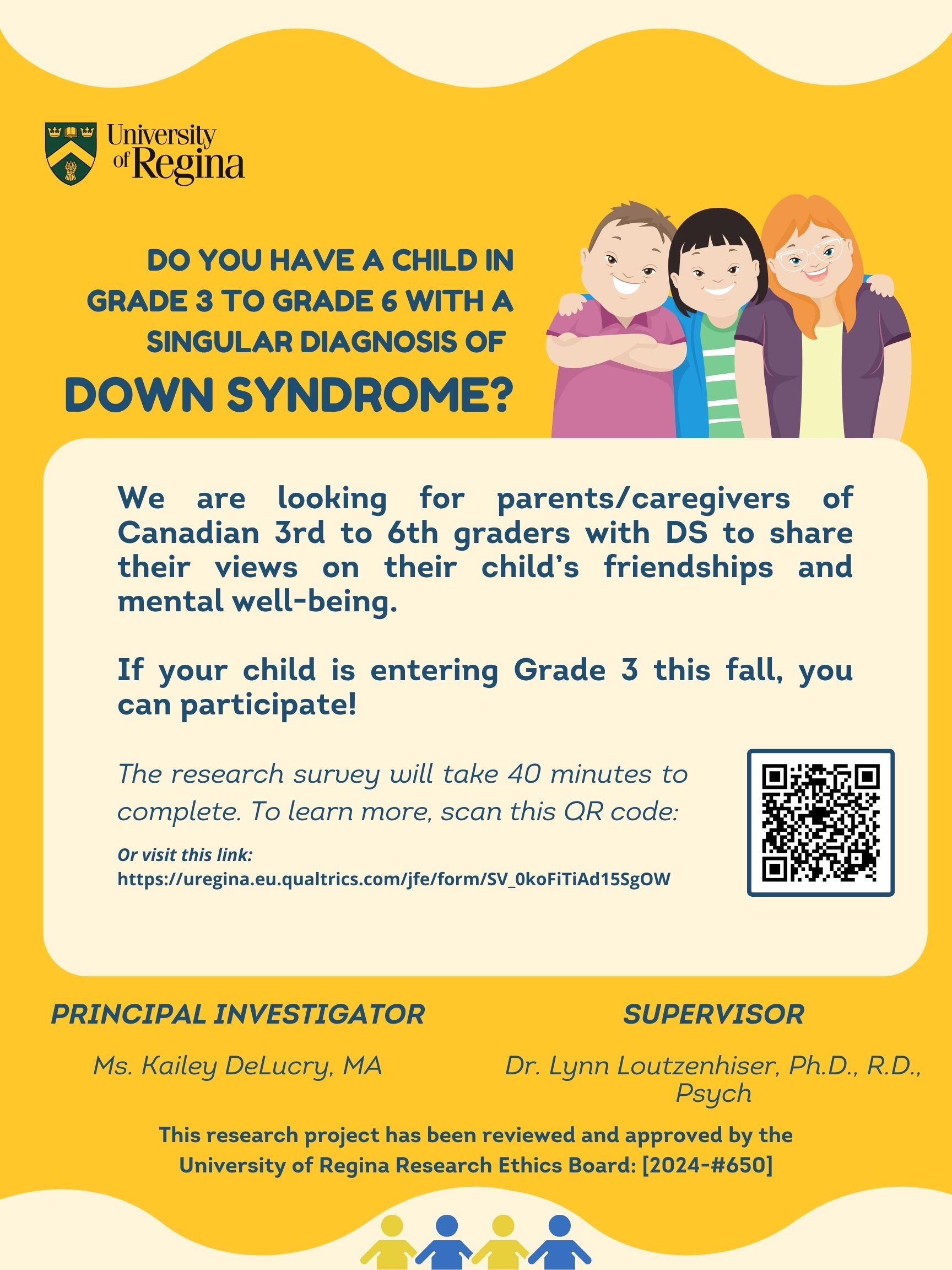
EXPLORING PARENT AND CAREGIVER PERSPECTIVES ON FRIENDSHIP AND PSYCHOLOGICAL WELL-BEING AMONG THIRD TO SIXTH GRADERS WITH DOWN SYNDROME (University OF REGINA, Remote)
A PhD candidate at the University of Regina is exploring friendship and psychological well-being in children with Down syndrome in Grades 3 to 6 to determine if this is a particularly critical period in their social development. The goal is to better understand the social networks of children with Down syndrome and provide information to develop targeted support to help them build strong social connections early in their school years, which may translate to lifelong friendships/friendship skills.
- Seeking parents and caregivers of children with Down syndrome in Grades 3 to 6.
- Participants will complete a 40 minute online survey.
- The survey will collect detailed information about children’s friendships, including the number of friends, time spent with them, and the quality of these friendships. It will also explore the children’s social skills, well-being, and the parents’ own mental health and parenting practices.
Follow the link below to participate in the study.
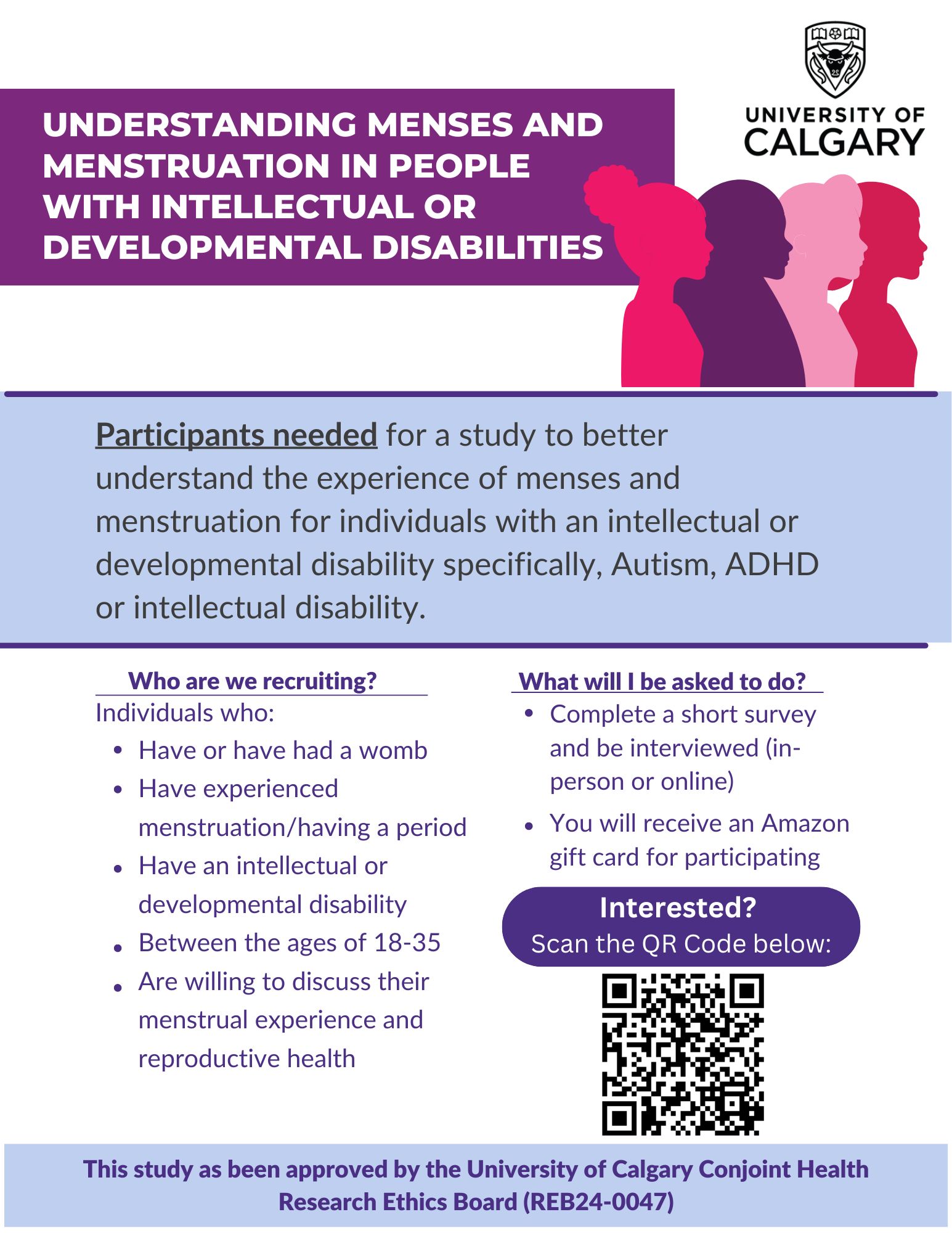
UNDERSTANDING MENSES AND MENSTRUATION IN PEOPLE WITH INTELLECTUAL OR developmental DisabilitIES (University OF CALGARY, Remote)
Researchers at the University of Calgary are investigating experiences of menstruation in individuals with autism, ADHD, and intellectual disabilities. They are seeking both caregivers and self-advocates to participate in a study, and hope to use this research to better understand menstruation in those with developmental and intellectual disabilities. This study has been approved by the research ethics board at the University of Calgary.
- Seeking self-advocate participants who have or have had a womb and are between 18-35 years old and caregiver participants who care for these individuals.
- Participants would complete a 30 minute survey and a 1 hour interview with a researcher. This interview can be online over Zoom or in-person.
- Participants will receive a $25 Amazon gift card to thank you for your participation.
Follow the link below to fill out an expression of interest survey and a researcher will reach out to you with more information.
For any questions, please email laura.stjohn@ucalgary.ca

Racialized Caregivers’ Experiences Accessing Healthcare and Social Services for Children with a Neurodevelopmental Disability (Manitoba University, Remote)
Researchers at Manitoba University are conducting two surveys to better understand the experiences of racialized caregivers accessing healthcare and social services for children with a neurodevelopmental disability. Both studies have been approved by the Univerisity of Manitoba Research Ethics Board.
- Participants for both studies must live in Canada, be a member of an ethnic minority, and be the parent and/or primary caregiver of a child with a neurodevelopmental disability such as Down syndrome, autism, or ADHD.
- The first study requires completing a 35 minute online survey (linked below). Participants will be entered into a draw for a $50 gift card of their choice.
- The second study requires completing a 1.5 hour interview and drawing a journey map of meaningful places, people, and things. Participants will receive a $50 gift card of their choice.
To participate in the second study, or for more information, please email Michelle.Kee@umanitoba.ca
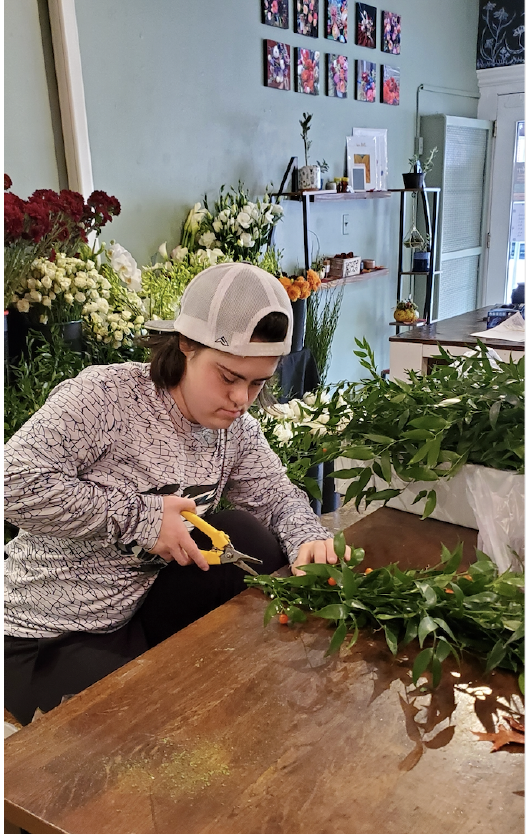
Project ASPIRE
Assessing Skills that Predict Independence and Readiness for Employment for Adults with Down Syndrome (DREXEL University, Remote)
Researchers at Drexel University are conducting a study to understand more about cognitive and behavioral factors that are associated with vocational outcomes and independent living skills among young adults with Down syndrome.
- Seeking family members of adults with Down syndrome between the ages of 18 and 39.
- Participation takes approximately 1.5 hours
- Participants will be asked to answer questions about their family member’s behavior, daytime activities, and your family’s background.
- Participants will be compensated for their time with a gift card.
Questions can be directed to the study Principal Investigators, Dr. Nancy Raitano Lee
and Dr. Gregory Wallace via email (ladder_lab@drexel.edu) or phone (215.553.7164).If you’re interested in participating in the study, please fill out the short survey linked below to determine eligibility.

YOU & ME: PONDERING PUBERTY
CO-CREATING AN ACCESSIBLE HEALTH RESOURCE WITH TEENS WITH IDDS (University of Toronto, Remote)
A graduate student in the MSc in Biomedical Communications program at University of Toronto with the support of Surrey Place is calling youth and teenagers with Intellectual and Developmental Disabilities (IDDs) accompanied by their support person or guardian to provide feedback on the creation of a puberty education resource.
• In-person and online focus groups with individuals with IDDs between the ages of 8-30 will take place during mid-May. Focus group participants will receive a $25 gift card.
• For individuals who wish to contribute to this project without participating in a focus group, an anonymous online questionnaire can be filled out.
To participate, email Geneviève Groulx at ponderingpuberty@gmail.com
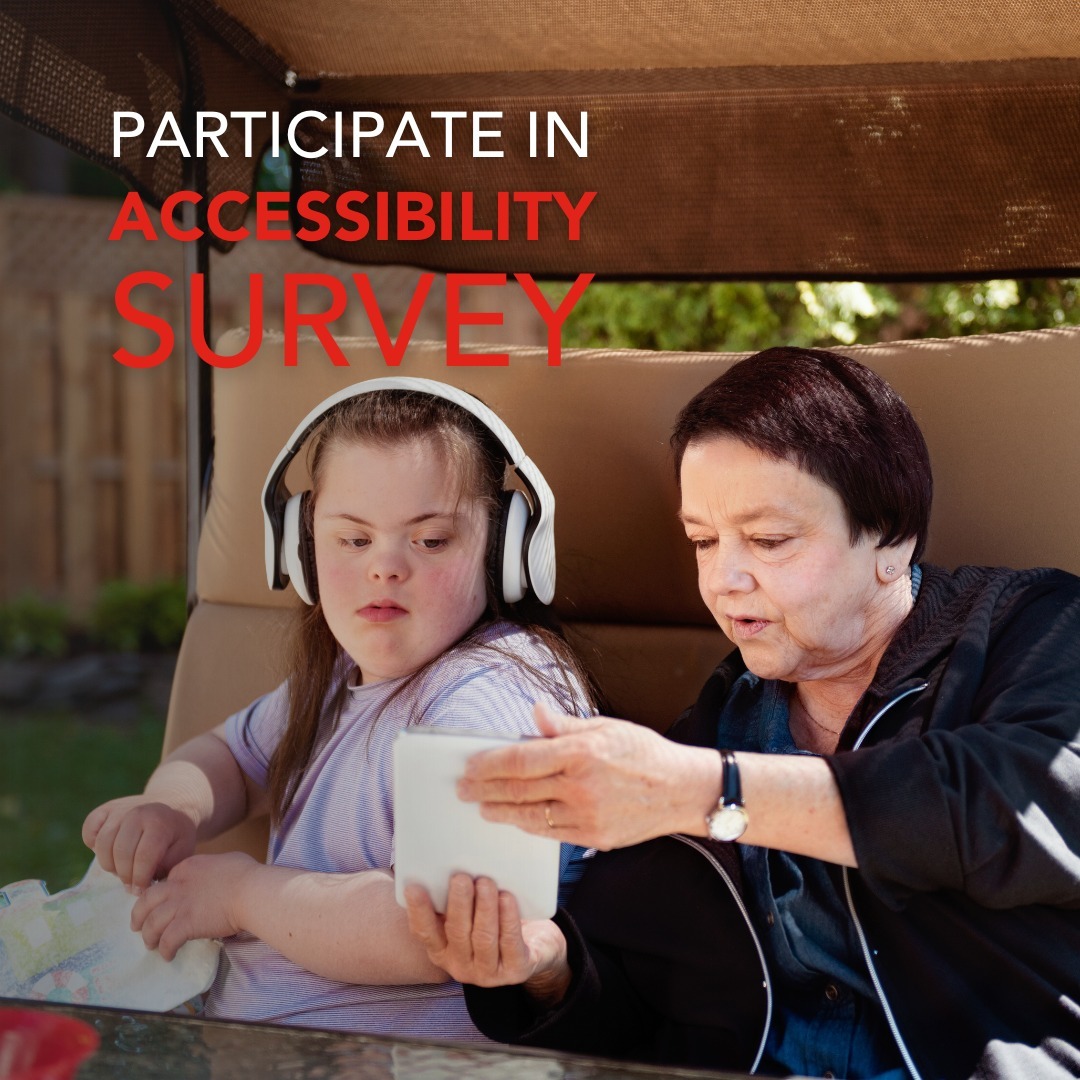
GO BARRIER FREE: A STUDY OF GAPS AND BEST PRACTICES IN INFORMATION AND COMMUNICATION TECHNOLOGY ACCESSIBILITY SOLUTIONS
(New Brunswick Community College, Remote)
New Brunswick Community College is looking for people with disabilities and their caregivers to participate in a research study about accessibility standards. The study will examine accessibility standards in information and communication technologies, the built environment, and transportation to help identify and remove barriers in these areas as well as prevent new ones. You can choose how to participate:
- An online interview via videoconferencing
- An online survey
For full study details including more information about eligibility, click the link below.
To participate, please email Andrew.Urquhart@nbcc.ca
See Research in Action
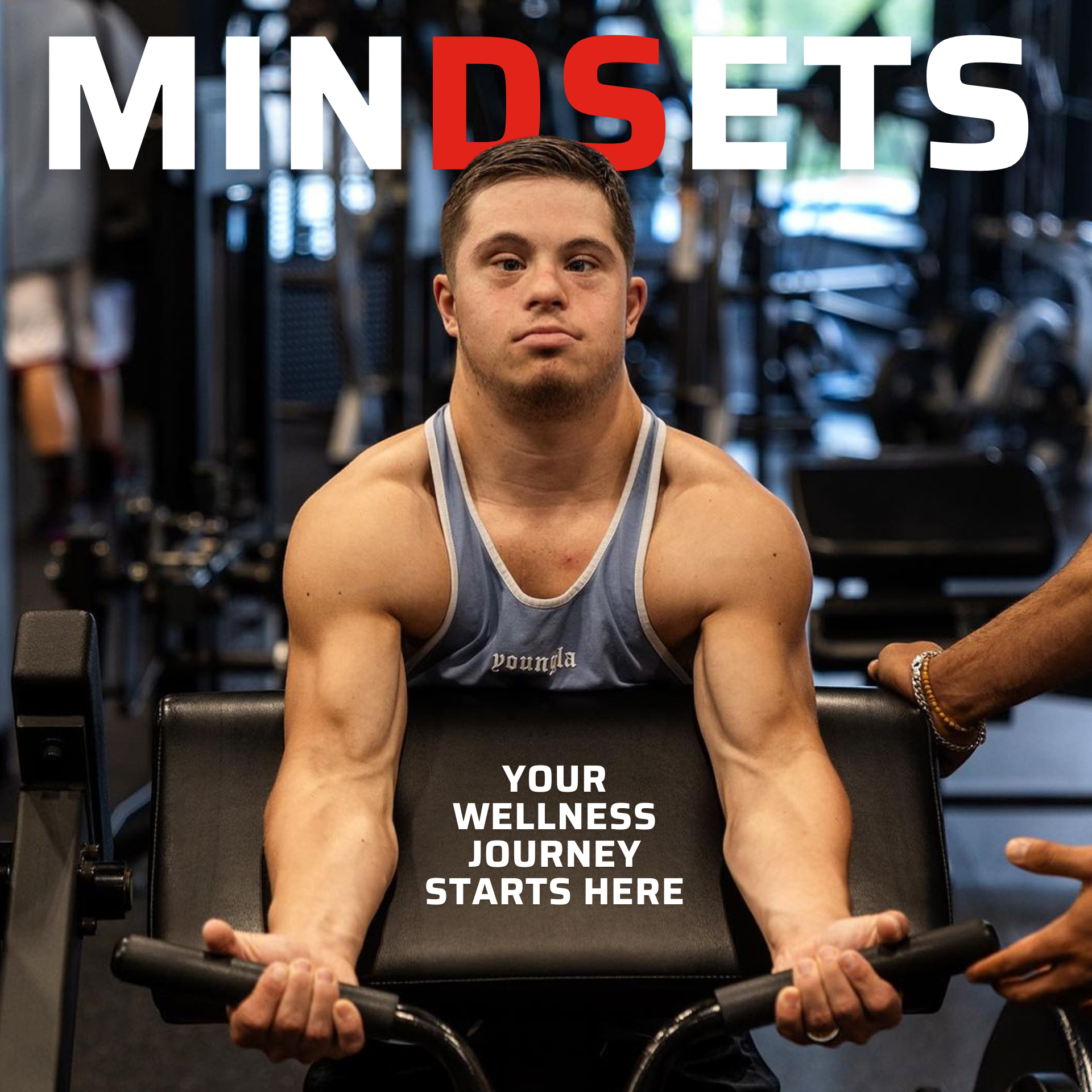
The Global Mindsets Study was the first of its kind to explore the link between physical activity and cognition in individuals with Down syndrome. Contrary to typical fitness advice for people with Down syndrome, the study showed that regular exercise is not only beneficial but can improve cognitive abilities.
The results were publicly released in October 2023 and are now the foundation of the Mindsets Wellness Program. This new program is designed to help individuals with Down syndrome build healthy habits, providing the same opportunities to benefit from an active, healthy lifestyle as anyone else. Mindsets focuses on education and routine building in three main areas of wellness: fitness, nutrition, and self-care. You can currently preregister for the Mindsets Wellness Program, coming in 2024.
Resources for Every Stage of Life
Looking for already available Down syndrome research? You can find CDSS publications for each stage of life and recommended third-party research and resources in the library below.